

For PR pros and journalists alike, the climate beat presents a paradox: the urgency is higher than ever, yet audience/editor attention sometimes feels harder to capture.
Madeleine Cuff, environment reporter at New Scientist and former journalist at the i Paper, explores how her approach to climate storytelling has evolved. She also dives into what comms professionals can learn from pitching to a specialist publication versus a national paper.
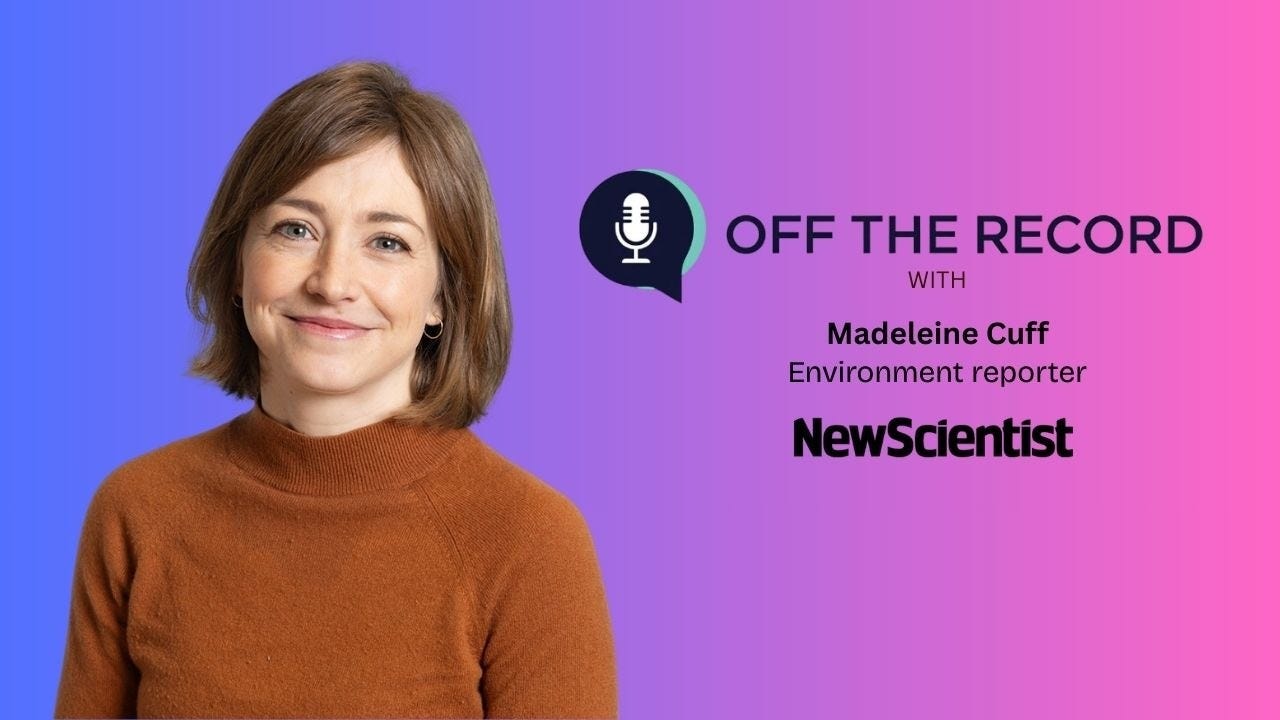
1. How do you balance reporting climate urgency without causing apathy or “doom fatigue”? What can PR professionals learn from that? Climate is a strange beat. At this point, we mostly know the basic story: greenhouse gas emissions are causing the world to warm, and without action, our weather will keep getting more dangerous and deadly. So the challenge is to find fresh ways to tell that story, without diminishing the seriousness or the urgency of the crisis, or relying on irresponsible angles to get clicks. I’m not sure I’ve found the magic formula just yet, but in my experience there are three approaches that work well for climate reporting. Firstly, finding an inventive way into a topic that surprises a reader and makes them want to find out more. For example, we know greenhouse gas emissions are causing the planet to warm, but perhaps it’s more interesting to find out that action to tackle air pollution has also caused a surge in warming in recent years. Finding the angles that surprise readers and disrupt their inner monologue of “I know that already” is crucial for improving a story’s reach and impact. Secondly, in my view the most powerful climate and environment stories report on real world changes that people can connect with. Unfortunately, climate change is no longer a story about the future - it is happening in the here and now, right in front of our eyes. The silver lining is that this makes for a much more impactful narrative, connecting the disruption in the world around us to the global, long-term picture. Finally, and I know this has been said a thousand times, but focusing on solutions really is a great way to engage readers. Very few people will tune into a story that tells them there’s no hope and we are doomed - but they will be interested to learn more about a promising new breakthrough that could help solve the problem. PRs, just be careful not to over-hype.
2. You’ve covered the environment for both the i Paper and now the New Scientist. What kind of language or framing do you find most effective in communicating climate issues to a broader audience? I think in short the answer is to simplify without dumbing down. There’s a knack to stripping back the scientific and policy jargon that you find everywhere on the climate and environment beat (COP summits, I’m looking at you) and really thinking hard about how to translate that into something meaningful for the average reader. I think readers, certainly for the i Paper and New Scientist, really appreciate honesty and transparency in reporting - if I’m writing about a promising climate solution, for example, I’ll include the caveats or drawbacks to the technology, or if it’s a policy decision, I’ll explain why it might be controversial. Readers are much better informed about these issues than you might think, and they appreciate being given the whole story, not a partisan tirade or puff piece.
3. And then how has your approach changed for an audience that is already engaged with the climate crisis? The difference with New Scientist readers is that I have the freedom to indulge my inner nerd a bit more - I can get a bit more into the weeds of the science underpinning a story and spend more time explaining the complexities of an issue. But the same principles definitely apply whether I’m writing for a daily newspaper or a science magazine - strip back on the jargon, think creatively about how to present a story, carefully consider why a reader should care and what this story might mean for them.
4. What trends are you seeing in how climate is being covered, and how should comms teams adapt to that? Climate is gradually filtering through into every area of reporting - it’s a finance story, it’s a tech story, it’s a politics story, it’s a science story, so comms professionals shouldn’t just be approaching me with their ideas, they should be thinking across the entire newsroom. As I mentioned above, there are also increasing opportunities to connect what’s happening out in the real world (drought, record temperatures, the ‘false autumn’ we’re having in the UK etc) with a wider climate story. Smart, timely analysis that helps readers to make sense of connecting the local to the macro will always be well received. I would say climate reporting is increasingly about trend analysis rather than one-hit stories about a single piece of research. Finally, I think a really effective way of telling a climate story is to take a deep dive, narrative approach. The Guardian recently did a fantastic piece on the torrential rainfall that tore apart mountainsides in the Alps last summer. I think these deeply reported, narrative-driven long reads are a really great way to combine the science and the humanity of climate reporting, and will only grow in popularity as newsrooms look to deepen reader engagement. So, for comms teams, thinking about the component parts of that kind of package - human interest, visuals, data, scientific research - is crucial.
5. What kinds of assets are most useful when you’re covering a climate story — e.g. visuals, case studies, spokespersons or field access? In my current role, access to researchers and entrepreneurs in the field, or a behind the scenes look at the research process, is really valuable for the right story. Good visuals and increasingly, quality video, can also make the difference between a story being commissioned and it being spiked.
6. Is there anything else you’d like to add that I haven’t asked you? All good comms professionals know this already, but for the best results, pitch early and pitch exclusively! I want to hear about promising study results, data from early pilot trials, a bright new idea from a respected thinker, and I want to hear about it before anyone else. A tailored pitch that shows someone has thought of why this story is perfect for New Scientist, rather than a more general outlet, always gets my attention. And we really will look at the detail of any pitch – we’re looking for accuracy and rigour, and we will talk to experts in the field to make sure any story holds water. So be prepared for some scrutiny!
Now for a quick fire round...
Best time to pitch you? Mondays and Tuesdays (we’re a weekly publication and there’s usually still time in the diary at the start of the week to take on new ideas)
Worst time to pitch you? Thursdays and Friday afternoon as I’m focused on getting everything I need to file for the week out of the door
A link to a story you wrote in an unusual place? Most of this feature was written from my car parked next to a field of cows!
Best place to contact you? Email me at Madeleine.cuff@newscientist.com or find me on Bluesky.
Remember folks, keep this just between us! We’re off the record.
I’m now offering media masterclasses for brands looking to sharpen their storytelling, improve their relationships with journalists and boost their media coverage. If you’re interested, please contact me at stephspyro1@gmail.com