

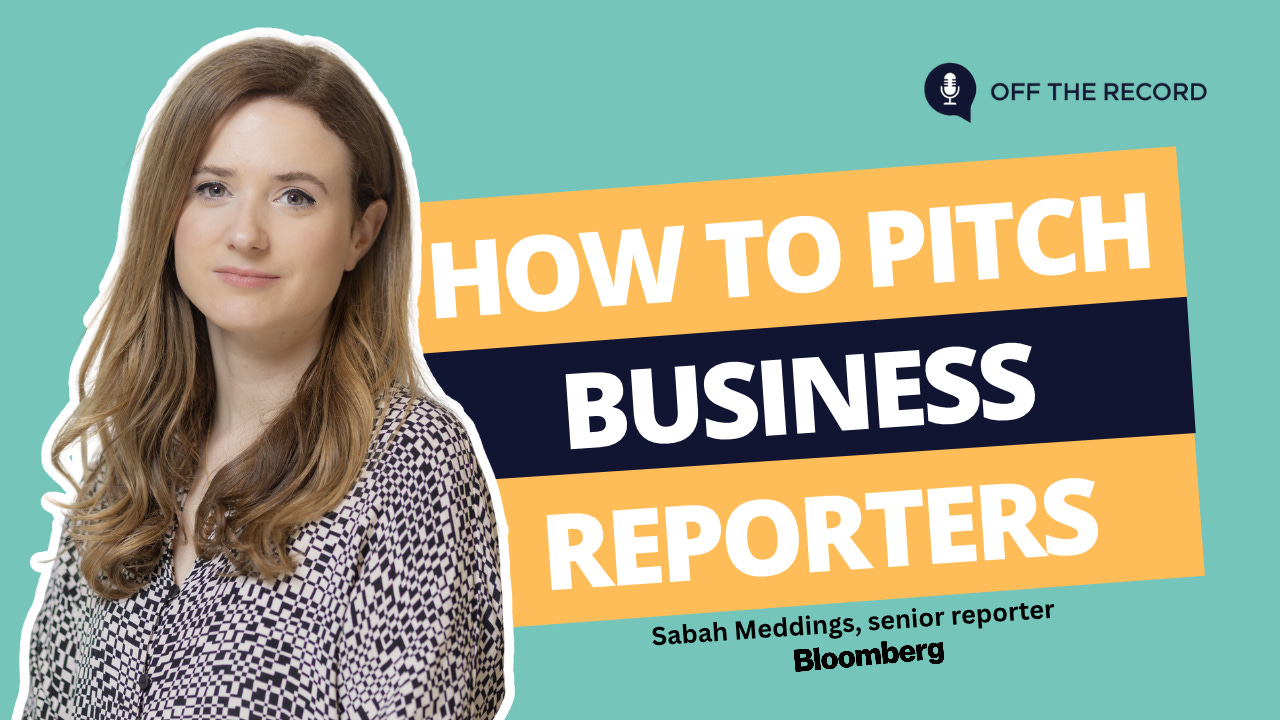
Sabah Meddings has been a reporter at Bloomberg News for over four years. Before that, she was at the Sunday Times. Today she’s in the Off the Record hot seat sharing everything from what stories she’s most interested in to pitching pet peeves. Let’s dive straight in…
Sabah, how would you describe your patch as a UK business reporter? What areas are you particularly keen on covering? I’m lucky that my brief is broad but largely focused on features, interviews and (hopefully) scoops about UK business. I’m interested in interviewing chief executives, writing corporate profiles and reporting on how government policy is affecting business in the UK. I’ll also be focusing more time on private companies, in the UK and Europe.
What are the sorts of developments within a business that PRs might underestimate as potential news stories? I often find PRs overlook how a little more access could make for a much better story. Often PRs will get in touch to pitch a story about a new funding round, or new product a company might be launching. But unless it’s exclusive and big news, we’d rarely give it a huge amount of coverage. A behind-the-scenes look at how things are made, or seeing how companies are adapting their operations to cut waste or energy emissions can often make more interesting stories.
When I covered pharmaceuticals, a company announcement about trial results was far more accessible when we were able to speak directly to the researchers working on the drug.
How interested are you in the human stories behind the high street – the people, communities and businesses affected by changing retail habits? Are you interested in case studies and customer experiences, or do you tend to prioritise the corporate angle? A really good story incorporates both. Often it’s a thoughtful case study showing the human impact of change that can draw a reader into a story, especially if there are great pictures to go with it. Sometimes the most time-consuming part of the reporting is finding the perfect case study to sum up what we’re trying to show. If we think it’s worth going out to collect vox pops for a piece, we’ll spend a lot of time considering where best to go, and seeing what the data tells us. For a piece we did on the High Street ahead of the budget, my colleague went up to Wigan to speak to businesses and shoppers there.
We would usually then want the big corporate voices to speak to trends across the UK, which is why interviews with CEOs and other senior executives are so important for our reporting.
How useful are regional stories to you? Could a development in one town become a much bigger national business story? Absolutely. If I think back to some of the most interesting stories I’ve worked on in the past few years, often it’s included a reporting trip to a part of the UK which tells us something about national or international policy, and how local communities have been impacted. One story I wrote about the decline of the fishing industry in Grimsby, told us something about why this particular community felt so strongly about Brexit and leaving the European Union.
I also travelled up to Barrow-in-Furness ahead of the last election, speaking about the defence industry but also about the strength of feeling on immigration.
You’ve covered industries like tobacco and gambling. How can comms teams in controversial or highly regulated sectors build solid relationships with journalists? The most useful thing a PR can offer journalists is access. When I covered gambling, the companies that spoke openly about how they were responding to new regulation, whether it was through interviews or background briefings, were always easiest to work with. Even if the stories weren’t always favourable to the companies, responding to questions in detail meant the company could ensure its point of view was reflected fairly in a story. It’s the ones that refuse to engage that make life difficult, both for the journalist but also the company.
Quick fire time...
Biggest PR pitching pet peeve? Getting in touch to offer an interview and then asking for questions ahead of time.
CEO interview or behind-the-scenes access? Both!
How many follow-ups are too many? Usually, more than one. Unless it’s a big story that we might have missed.
Comms pros can contact Sabah on LinkedIn.
Remember folks, keep this just between us! We’re off the record.
Thank you for reading Off the Record! We want to make our newsletter as helpful as we can, so please get in contact if there’s anything specific you want to see.
We offer media masterclasses for brands/PRs/organisations looking to sharpen their storytelling, improve their relationships with journalists and boost their media coverage. If you’re interested, please email us at info@offtherecordmedia.co.uk